

Disclaimer
The information given on this website is for educational purposes only. Information and statements regarding
dietary supplements and natural products have not been evaluated by the Food and Drug Administration (FDA)
and are not intended to diagnose, treat, cure, or prevent any disease. . . . See Full Disclaimer
Village Healthcare
What Every Family in West Africa Should Know About Health and Healing

1.02 Understanding How the Body Works
 Before we begin talking about the healing and health of our bodies, it is important
to first understand how our bodies work. The human body is very complicated, with
many different parts that work together so that the body can function properly. Understanding
the basics about how your body works can help you understand better how to take care
of it.
Before we begin talking about the healing and health of our bodies, it is important
to first understand how our bodies work. The human body is very complicated, with
many different parts that work together so that the body can function properly. Understanding
the basics about how your body works can help you understand better how to take care
of it.
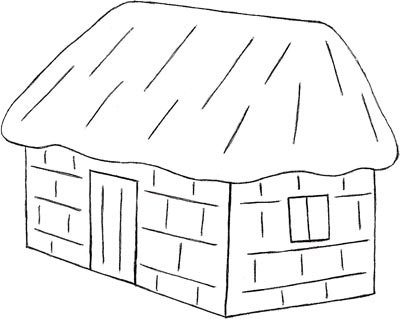
In many ways your body is similar to a house. A house has to be made out of something, and just like a house has many different parts to it (doors, windows, walls, etc), the body also has many different parts (hands, feet, eyes, ears, etc).
 Cells
Cells
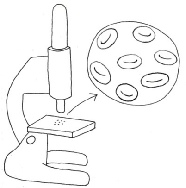
If your body was a house, the cells would be the bricks that the house is made out of. Every part of your body is made of cells. These cells are so small that they can only be seen through a special tool called a microscope.
The most important thing you need to understand about the cells of your body is that they need oxygen in order to live. Without oxygen the cells will die.
Skin
Skin covers the outside of your body. It helps to hold your body together and to protect the body in many different ways.
The skin helps to control the temperature of the body. If the body gets too hot, sweat will come from the skin to help cool the body. If the body is too cold, the skin will begin to shake or tremble making movements that help to warm the body.
The skin also helps to keep the body clean. When there are too many toxins in your body, these toxins can come out through the skin. A rash or skin problem is most often caused by toxins that the body is trying to get rid of through the skin.
Brain
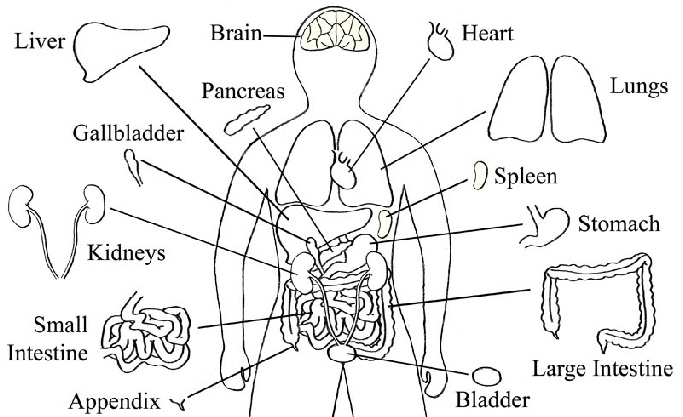
The brain has many different things that it does for your body. It is the brain that allows you to think, learn, and remember things. The brain also controls the rest of your body by sending messages to different parts of your body, telling each part what it needs to do.
Heart
Your heart is located a little to the left of your chest and is about the size of your fist. Your heart is a muscle, and acts like a pump to send blood to the rest of your body. The heart actually works like two pumps in one. The left side of the heart takes oxygen from the lungs and pumps it through the blood to the rest of the body. The right side of your heart receives blood from the body and sends the toxins from the blood into the lungs.
Red Blood Cells
The red blood cells in your body are like little workers that carry things from one part of the body to another. It is the red blood that carries oxygen to all the cells in your body, as well as carrying all the nutrients that your body needs. The red blood cells also help to keep your body clean by carrying the toxins that need to be cleaned out of the body. Also, when you have a wound that bleeds, it is the red blood cells that are helping to clean and heal the wound.
Lungs
The lungs are what you use to breathe. When you take a breath you breathe in air that has oxygen in it. The oxygen goes into your lungs and then into the red blood cells which carry the oxygen to the rest of the body. The body takes the oxygen out of the blood and replaces it with any toxins or wastes it does not need. The blood carries the toxins back to the lungs, and when you breath out, the toxins are carried out of the body in the form of bad air (carbon dioxide). Then, with the next breath the air brings in more oxygen.
You need oxygen to live. Without oxygen your body will die, so it is important to take care of your lungs. When a person smokes, they are breathing in poison instead of oxygen. Cigarette smoke is very harmful to your lungs and your body.
Stomach
Everything you eat and drink goes into your stomach. The stomach is similar to a mortar, it turns and mashes all the food and mixes it with acids that help to break it down more.
Small Intestine
After your stomach mashes all the food and liquids, this passes into the small intestine. The small intestine is a long tube that is packed inside your belly. If you stretched out an adults' small intestine it would be about 6.7 meters (22 feet) long.
The small intestine breaks down the food mixture even more and works to absorb all the nutrients from it. The nutrients pass from your intestine into the blood and is carried to the liver. After all the nutrients are taken out of the food, the wastes that are left over go into the large intestine.
Pancreas
The pancreas holds certain chemicals, called enzymes, that the intestines need in order to break down the food mixture and absorb the nutrients. The pancreas works with the intestines by sending enzymes into the intestines when needed.
The pancreas also has another job of controlling how much sugar is in the blood, which is very important because it can be very dangerous for your body if there is too much sugar in your blood.
Large Intestine (Colon)
The large intestine is fatter than the small intestine. It is also packed into the belly and would measure about 1.5 meters (5 feet) long if you spread it out.
The large intestine absorbs any last remaining nutrients that are left in the waste products. It also absorbs any water or liquids so that the waste that is left becomes solid stool that will pass out of the body when you relieve yourself.
Appendix
The appendix is a small tube of tissue that is connected to the large intestine, very near to the place where the small intestine and large intestine join together. The appendix helps to fight germs in the intestines. It also helps to protect the good bacteria that your body needs.
Liver
The liver has many different jobs that it does for the body. One of its main jobs is to send helpful nutrients to other parts of the body and to filter out things that would harm the body.
When your body absorbs nutrients from your food, your liver works to filter out anything that might be bad for the body and then sends the good nutrients out to the rest of the body.
The liver also filters any medicines you take and makes it possible for the body to use the medicine. Too much medicine can be very bad for your liver. Drinking a lot of alcohol can also damage the liver and cause a lot of problems for the body.
Another job that the liver does is to make a fluid called bile. The body needs the bile fluid to help break down oils and fats. Without bile, the body would not be able to break down oil or fat, and these would become toxins and wastes in the body. The bile also helps the solid stool to pass more easily out of the body.
Gallbladder
The gallbladder is like a storage container for the bile fluid that the liver makes. When the liver makes bile fluid it then sends the bile to the gallbladder where it is kept until the body needs it.
Kidneys
The kidneys are also like filters in the body, but instead of filtering the nutrients like the liver does, the kidneys instead work to filter toxins out of your blood. All the blood that is in your body gets filtered through the kidneys where it is cleaned. After taking the toxins out of the blood, the kidneys mix the toxins with water to make urine.
Bladder
After the kidneys have mixed the toxins and water together to make urine, the urine is then stored in the bladder until it is passed out of the body when you relieve yourself.
The color of your urine should be clear or a light yellow color. If the color of your urine is dark it means that you are not drinking enough water. Your kidneys need lots of water to be able to work well.
Spleen
The spleen helps to control the amount of blood that is in your body, as well as removing any damaged or dead blood cells. The spleen also helps your body to identify and fight germs that can cause sickness in the body.
Bones
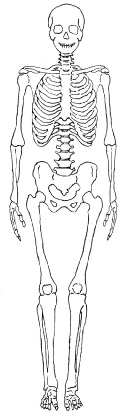
Bones give the body shape, form, and structure. They also help to protect the parts of your body that could be easily hurt or damaged. The bones in the body will continue to grow until the person is about 20 years old, but even after they stop growing, they will still continue to change and rebuild themselves, or to fix themselves if they break.
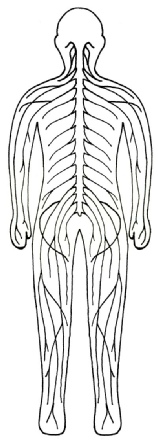
Nerves
Nerves are like little messengers that are spread out all through your body. It is the nerves in your body that tell you what different things feel like. The nerves in your body can tell you if something is hard or soft, hot or cold, pleasant or painful.
If you put your hand in fire you will quickly pull it out again because you feel pain. You can know that the fire is hurting your body because the nerves tell you that it is painful. This is one way that the nerves help to protect your body from things that could harm it.
Another thing the nerves do is to carry messages from your brain to the different cells in your body, telling the different parts of the body what they need to do.
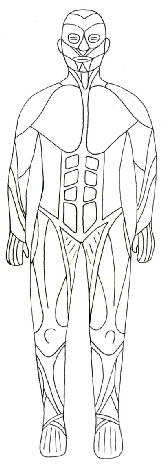
Muscles
The muscles in your body make it possible for you to move. Every movement that your body makes is controlled by a muscle. There are more than 600 different muscles in your body. Some of these muscles you can control, like moving your arms or legs. Other muscles you have no control of, like the beating of your heart. Your brain controls the muscles and tells them what they need to do.
Muscles are made mostly out of blood. If your blood is strong, your muscles also can be strong. Muscles give your body strength. You need to have strong muscles if you are going to lift heavy objects or do hard work. When your muscles are weak, your body also will be weak.
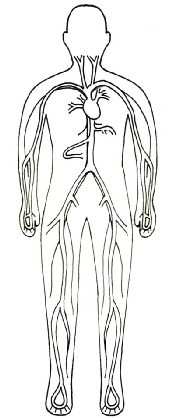
Blood Vessels
The blood in your body flows through blood vessels, which are like little tubes that spread all throughout your body.
The blood vessels that carry blood away from the heart are called arteries. The ones that carry blood back to the heart are called veins.
The blood that flows from the heart through the arteries carries oxygen to the different cells in the body. The blood that flows back to the heart through the veins helps to carry toxins and wastes to be cleaned out of the body.
White Blood
Your white blood cells are like little soldiers in your body that fight against germs and against disease. If you did not have white blood cells your body would have no way to fight against things in your body that can make you sick.
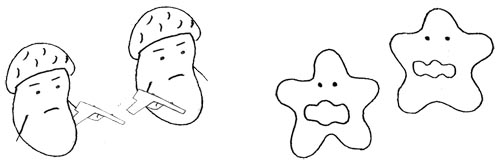
Lymph Nodes
Lymph nodes are like little jails inside your body that can trap germs inside of them. These little jails hold the germs until the white blood cells can fight them. Usually lymph nodes are small and you do not notice them, but sometimes disease can cause your lymph nodes to swell and then you might feel round lumps under your skin that may be painful. These lumps mean that your body is working hard to fight the disease.
Hormones
Hormones are chemicals that give instructions to different members of the body, giving commands and telling them what to do and when to do it. Hormones control a lot of different things in our bodies including body growth, weight, appetite, energy levels, emotions, and so much more.
One of the main things that hormones do in the body is to control how the body changes.
Children around the ages of 9-
An important thing to know about hormones is that women are affected by hormones even more than men. This is because a woman’s body is always changing. Her hormones change with every stage of her monthly cycle, they change during each stage of pregnancy, and they change again when a woman goes through menopause.
You have probably noticed taht women can be very emotional. One moment they are very happy, and then, very suddenly they can be upset or crying. Many times a woman will not even understand why she feels a certain way, she does not realize that it is because of her hormones. Hormones tell your body how you feel emotionally. So while the hormones are working to change many things in the woman’s body, the hormones are also changing and affecting many things about her emotions and how she feels.
Endocrine System
The endocrine system refers to all the glands in the body that make hormones and tell the hormones what to do.
-
Differences Between Hormones and Nerves
It is true that hormones and nerves both act as messengers in the body, telling the different parts of the body what they need to do. But nerves and hormones are both very different.
Here are some of the main differences:
Difference #1:
Nerves spread out along the spine and branch out to the other parts of the body, similar to the way tree branches branch out from the trunk of a tree, but hormones are chemicals that travel through the fluids of the blood.
Difference #2:
Nerves tell your body what you feel physically (hot, cold, pain) and also what things around you feel like (hard, soft, etc). Hormones tell your body how you feel emotionally (happy, sad, excited, angry, etc).
Difference #3:
Nerves work very fast and are very quick to let your brain know what you are feeling the moment that you feel it. Hormones work more slowly and may take a long time before you notice all the changes they make in the body.
Difference #4:
Nerves tell the different parts of the body to do their job (heart-
Hormones tell the body how it needs to change (heart-
Difference #5:
Nerves are the same for everyone. Men, women, children, babies, they all have nerves that all work the same way, but hormones are different for everyone. The hormones in a small child are different from the hormones of a child who is going through puberty. Hormones in men are different from hormones in women. Every individual person has different amounts of hormones. This is part of what makes each and every person so unique.
-
The Immune System
The immune system refers to the parts of your body that work together to identify and fight against germs that can cause disease. There are many parts of your body that are a part of the immune system, they all need to work together to protect the body.
For example, your skin is a protective layer covering your body so nothing bad can get inside. If something bad gets inside your body (through your skin, mouth, or some other opening), the white blood cells work to attack it so it cannot harm you. Your lymph nodes help by holding some of the germs until your white blood cells can fight them all. There are many other things that work together for fighting off disease and illness, but this is a basic idea of how your immune system works.
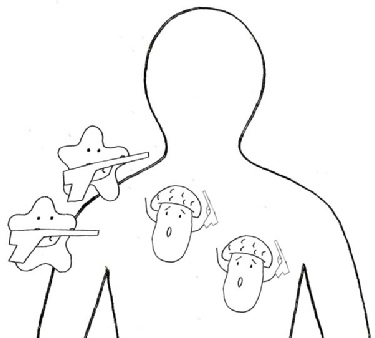
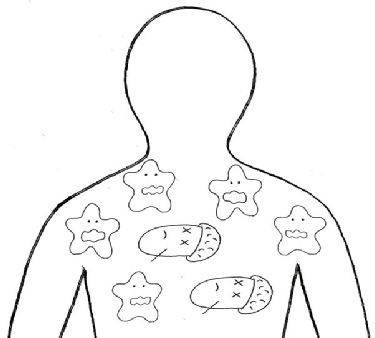
In many ways, your immune system is like the military of a country. The military is meant to protect the country from its enemies. If the military is strong it will be equipped to protect the country.
If an enemy sneaks into the country and the military does not know about the enemy's invasion, your country will be at in danger. In the same way, if germs enter your body but your body does not know about them, your body will be in danger.
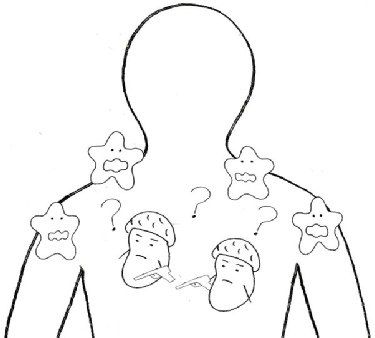
If an enemy comes into your country with better weapons than your country's military has, your country will be in danger. In the same way, if the germs that enters your body are stronger than any medication you can take, your body will be in danger.
If an enemy invades your country and destroys its military, the country will have no other way to fight against the enemy. In the same way, when HIV enters the body it damages the immune system and your body will no longer be able to fight against disease.
If you want to be healthy, you need to keep your immune system strong so that it can fight against disease.
Go to ______ for information on how to have a strong immune system.

What Is Oxygen?
Oxygen is in the air you breathe.
When you take a deep breath of clean air you are breathing oxygen into your body. All the cells in your body need this oxygen.

What Are Toxins?
Toxins are chemicals that are like poison to the body.
They can be very harmful to the cells of your body and can make the body sick.

What Are Nutrients?
Nutrients are things that your body needs in order to grow and be strong and healthy.
They also give your body energy and help it to function well.
Nutrients are found in the food that you eat.
But different foods have different nutrients, so it is important to eat many different kinds of food in
order to get the many different nutrients that your body needs.
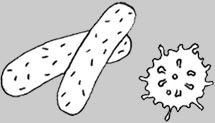
What Are Germs?
Germs are things that can cause sickness and disease in the body.
Germs are too small to see, but they live everywhere and can
cause a lot of problems for your body.
What Are Glands?